How to assess windthrow risk before a first thinning
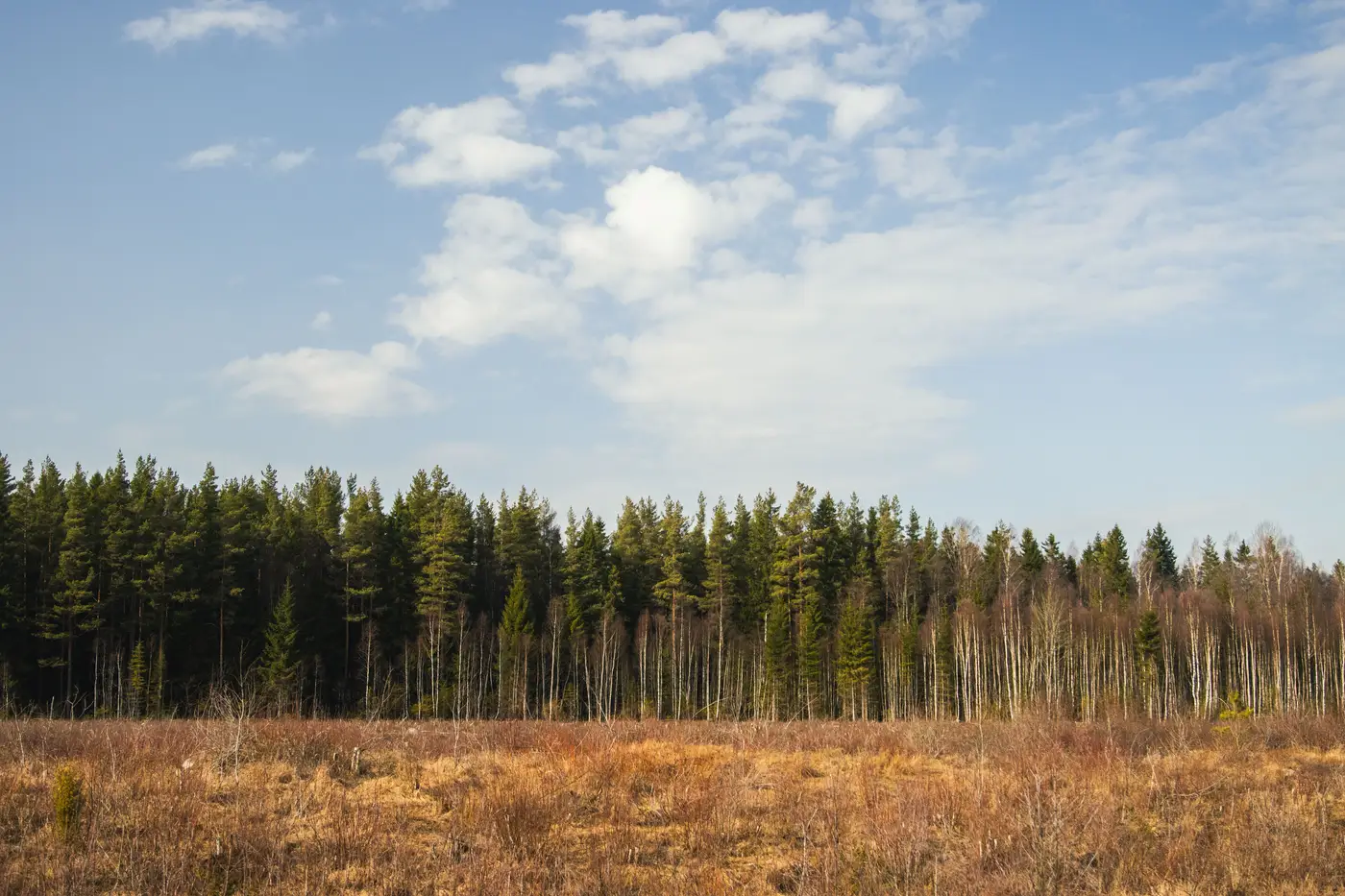
A first thin changes the physics of a stand overnight. Trees that spent fifteen or twenty years leaning on each other for lateral support suddenly have gaps between them, and the ones left standing have to hold themselves up in wind they've never felt directly. If you get the timing or the pattern wrong, you can trade one problem (overstocking) for a worse one (a blowdown patch that costs more to salvage than the thin was worth).
Below is what to check in a compartment before you cut.
Slenderness is the number that predicts failure
The single best predictor of whether a tree will go over after thinning is its height-to-diameter ratio, sometimes called the slenderness coefficient. A tree that's grown tall and thin in a dense stand, leaning on neighbors instead of building taper, has a root plate and stem that were never asked to resist wind load on their own. Pull height and DBH on a sample across the compartment. Ratios above roughly 80 to 100 (height in decimeters over DBH in centimeters, depending on species and region) are a red flag for a heavy first thin. Stands that stayed a little tighter on stocking, or that got an early pre-commercial thin, usually taper better and carry lower risk.
Soil and rooting depth matter just as much as stem form. Shallow or waterlogged soils limit root plate development no matter how good the stem taper looks. If you've got a wet flat or a thin soil pocket inside an otherwise sound compartment, treat it as its own management unit rather than averaging it into the block.
Edge exposure is a different risk than interior thinning
Thinning the interior of a stand and cutting a new edge against an open field or a recent clearfell are not the same operation, even if the basal area removed is identical. A fresh edge takes the full brunt of the prevailing wind on trees that have zero history of standing alone. This is why the leeward and especially the windward boundary of a compartment deserves a harder look than the middle: lower thinning intensity along the first one or two tree-lengths in from the edge, or a staged approach that feathers the stand density down toward the boundary instead of cutting it sharp.
If a thin is going to put a new edge against last year's clearfell or a public road right-of-way, walk that boundary specifically and check stem form there before you set the marking rule for the whole compartment.
Reading growth history as a proxy for stand condition
A compartment that's been tracking consistently against its expected growth curve, hitting its basal area and height targets on schedule, usually has the kind of even, well-developed crown and root structure that handles a thin without trouble. One that's lagged, or that shows an unusual jump tied to a gap-filling release, is worth a closer field check before you commit a crew. That history is exactly what a per-stand record of how each compartment has tracked against its own rotation plan gives you without walking every block: compartments running ahead and ready, compartments lagging and better left another season, laid out per stand instead of guessed at from the truck window.
A practical sequence before marking
- Pull slenderness on a sample plot in each compartment, not just the block average.
- Flag wet, shallow, or exposed-boundary zones as separate management units.
- Walk the windward and leeward edges specifically, not just the interior.
- Check the stand's growth trajectory against its planned curve. A stand that's lagging often hasn't built the taper a heavy thin assumes.
- Set thinning intensity lower near new or existing edges than in the interior.
None of this replaces a forester's eye on the ground. It does mean you're deciding which compartments get that eye first, instead of spending a day driving the block to find out.
Ready to see which of your compartments are tracking ahead of schedule and ready to thin? Plantation Monitor builds that picture from annual satellite passes, so the field check starts where the risk actually is.