Drought-stunted or just behind schedule: how to read a compartment before you thin
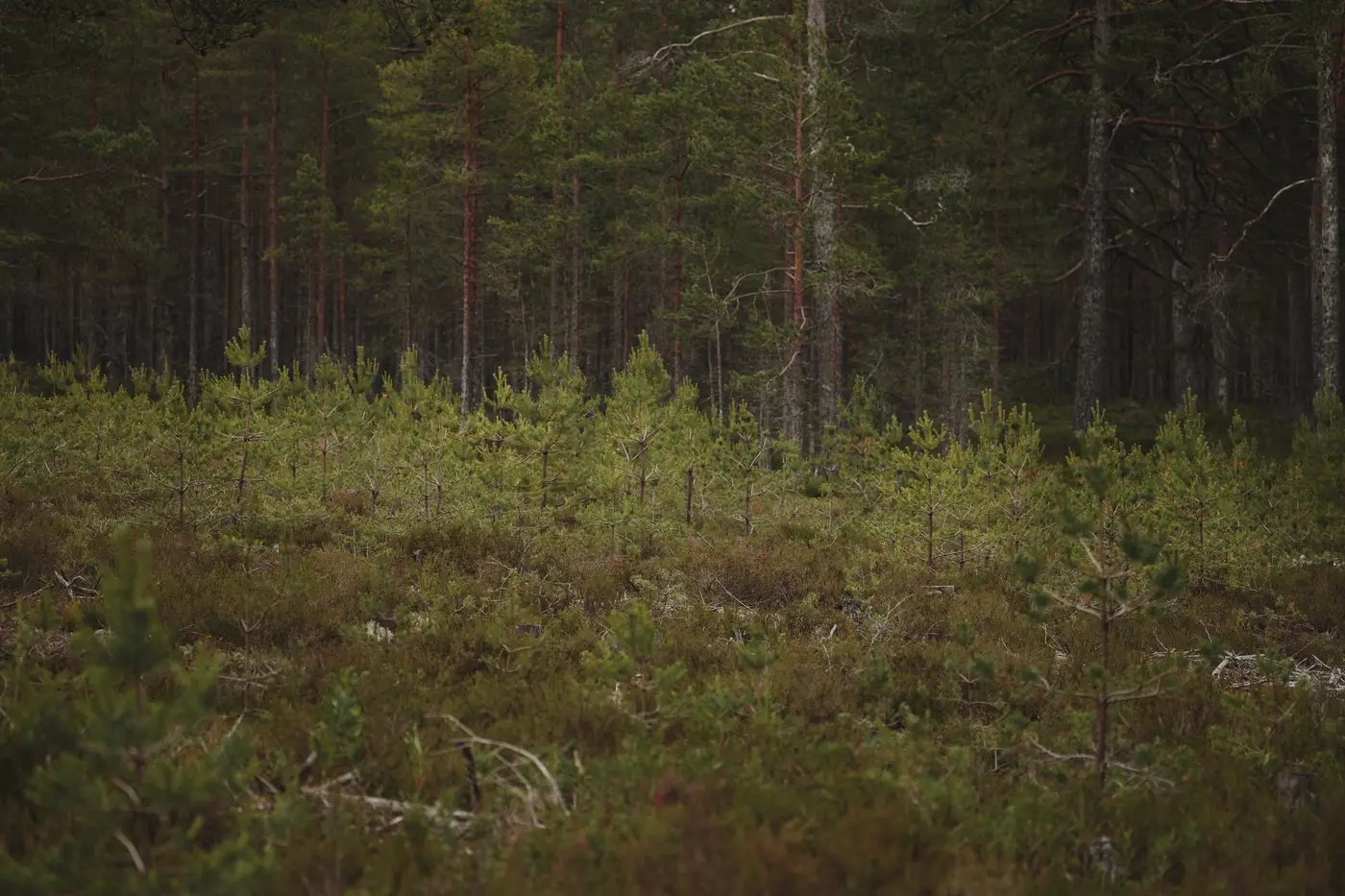
A compartment manager walks into the block, looks at the crowns, and makes a call: thin this one now, leave that one another season. The trouble is that a dry summer and a slow-growing site can produce the same silhouette from the fence line. Pale foliage, tighter crown spacing, a basal area that feels light for the age class. One of those compartments needs water and time. The other one needs a thinning crew. Getting the two confused costs you either a crop that never catches up or a thin that comes a year too early.
What drought stress looks like in the stand
Drought shows up as a dip, not a trend. A compartment that's hit by a dry year will show reduced increment across that growing season and usually across the neighbouring compartments too, because rain doesn't respect your compartment boundaries. Foliage colour often shifts first: needles or leaves go duller, sometimes with tip browning in conifers, before basal area growth visibly slows. Crown dieback from drought tends to start at the upper crown and work down, and it hits dominant and suppressed trees roughly in proportion, since a rainfall deficit doesn't care about social class in the stand.
The giveaway is recovery. Once rain returns, a drought-affected compartment starts climbing back toward its expected growth curve within a season or two. It was never off the track, it just slowed down on it. If you've got rainfall records or a regional dry-year flag for that growing season, and the dip lines up with it, you're looking at weather, not a site problem.
What a genuine growth lag looks like instead
A compartment that's genuinely behind schedule doesn't dip and recover. It sits below its expected trajectory year after year, independent of rainfall. The stand might have been planted on a poorer pocket of soil than the compartment map suggests, or establishment was rough (bad weed control in year one, a patchy stocking rate, competition from a neighbouring gum regrowth line), or the site index assigned to that compartment at planning was simply optimistic. These stands show suppressed trees falling further behind the dominants over time rather than moving together, because the limiting factor is persistent, not seasonal.
This is the distinction that drives the thinning and rotation call. A compartment that's drought-stunted this year gets flagged for a re-check next season once conditions normalise. The rotation plan for that block stays as is. A compartment that's genuinely lagging is one where thinning on the standard schedule would pull merchantable volume out of a stand that hasn't built the basal area to support it, and where the honest move is to push the rotation back for that block specifically.
Why the eyeball test struggles here
Walking the transect tells you what the stand looks like this week. It doesn't tell you what it looked like three growing seasons ago, or whether this year's index reading is a dip or a plateau. Crown closure by eye is also a lagging indicator. Stress shows up in growth increment well before it's visible in canopy cover, so a compartment can already be a season or two off its curve before a walk-through would flag anything.
What actually separates the two cases is a year-on-year index for that specific compartment, plotted against its own expected trajectory, not against a district average or a neighbouring block. A single bad year that tracks back to the growth line afterward is weather. A compartment that keeps sitting under the line, season after season, regardless of rainfall, is a site that's genuinely behind and needs the rotation plan adjusted, not just a note to revisit later.
Plantation Monitor builds exactly that per-stand time series from annual satellite passes, so a compartment's current reading sits next to its own growth history instead of a guess made from the cab of a ute.
If you're sorting your thinning list by the right criteria instead of the loudest crown, that's the comparison worth having in front of you.