Racking vs line thinning: which first-thin method fits your stand
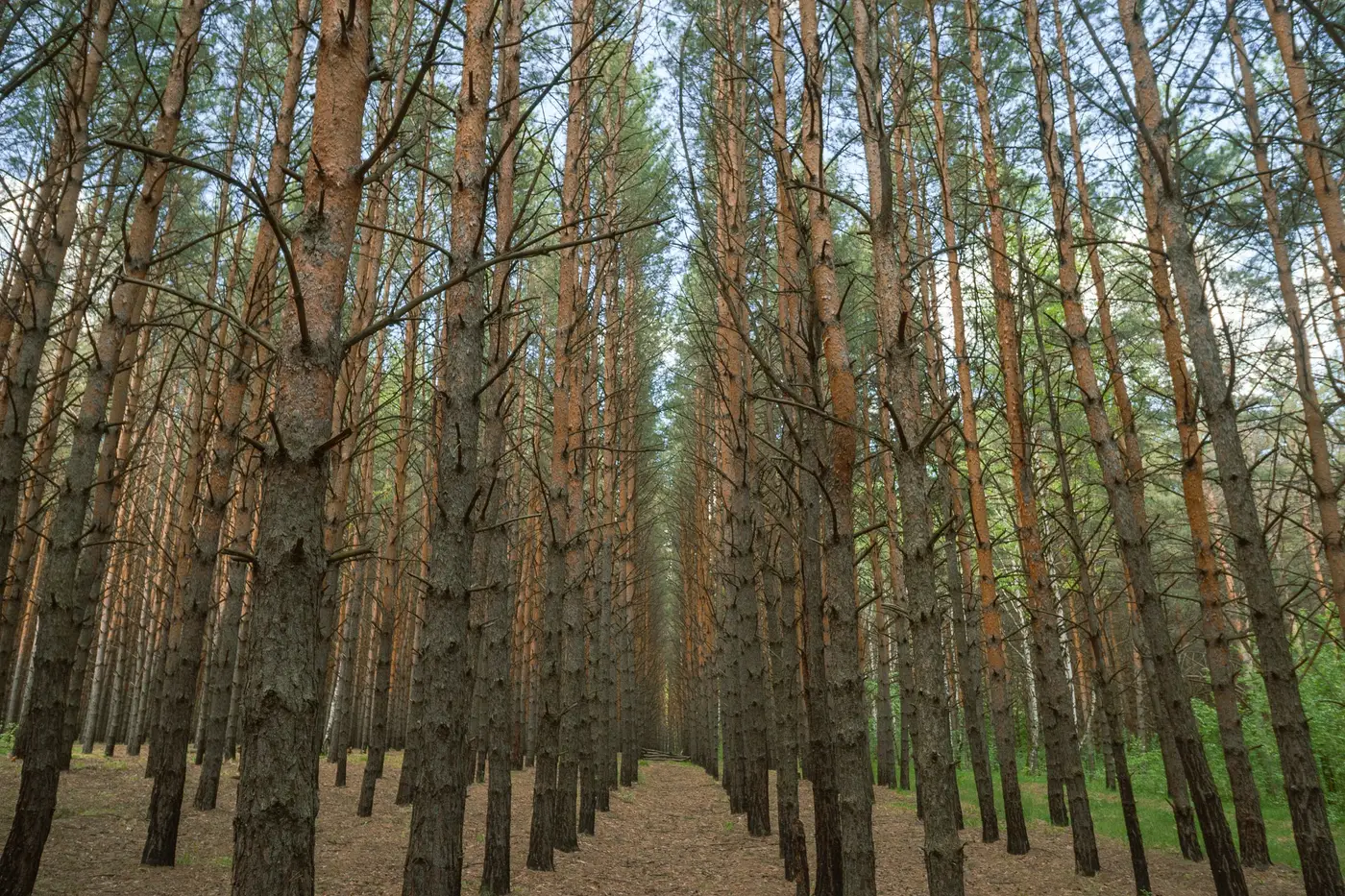
The first thin is the one decision in a rotation that's hardest to undo. Cut the wrong rows, and you've locked in a residual stand you'll be managing for the next twenty years. So before the harvester shows up, it's worth settling the question properly: racking or line thinning, and whether either one suits what's standing in your compartment.
What racking and line thinning do
Racking means the machine operator picks the extraction path as they go, usually based on stem spacing, form, and what's already growing where. There's no fixed interval. A good operator racking a compartment is reading the stand in real time, pulling suppressed stems, forked tops, and anything leaning into a neighbor, while leaving the straightest, best-spaced trees standing. It's selective in both senses: which trees come out, and where the machine travels.
Line thinning (sometimes called row thinning or systematic thinning) removes a fixed row out of every three, four, or five, regardless of individual stem quality. The extraction racks are set out geometrically before the harvester starts, not decided tree by tree. It's faster to plan, faster to run, and a lot easier to supervise on a contract where you're paying by the hour rather than by the stem.
Both get wood out and both reduce stocking. The difference is what they do to the stand that's left behind.
Which one fits your stand
Line thinning earns its keep when the stand was planted on a regular spacing and hasn't drifted much from it, when stem quality across the compartment is fairly even, and when the ground is steep or awkward enough that you want fixed, predictable machine corridors rather than an operator improvising a path on a slope. It's also the cheaper call on a per-hectare basis in a lot of contracts, since marking crews and selective-removal decisions add time the machine doesn't need.
Racking is the better fit where the planting was uneven, where there's been natural regeneration mixed in with the original crop, or where one part of the compartment has clearly outgrown another. If you walk a block and see pockets of suppressed, spindly stems next to a run of good form, a straight-line removal is going to take out some of your best trees along with the worst just because of where they happen to fall. That's the trade you're making with a systematic rack: speed and predictability against the certainty of taking some good stems with the bad.
Species matters here too. Radiata and other fast, even growers planted on a tight, consistent grid tend to tolerate line thinning well. Stands with more natural variation in form, or compartments replanted in patches over a couple of seasons, usually reward the extra time a racking crew spends reading the trees before they fall them.
Timing is the other half of the decision
Method only matters once you've established that a compartment is ready for its first entry. A stand thinned early loses volume it would have put on if left alone another season; a stand thinned late has already lost the increment that crowded stems would have added before suppression set in. The usual way to make that call is still a crew walking the block eyeballing crown closure, which is slow, and which tells you about the compartments someone visited this month and nothing about the ones that haven't been walked since last year.
Plantation Monitor tracks that readiness signal per compartment against its own growth trajectory, so you can see which stands are already ahead of schedule and which still need a season before either racking or line thinning makes sense. Worth a look before you book the first-thin crew for next quarter.