What is basal area, and why it drives your thinning call
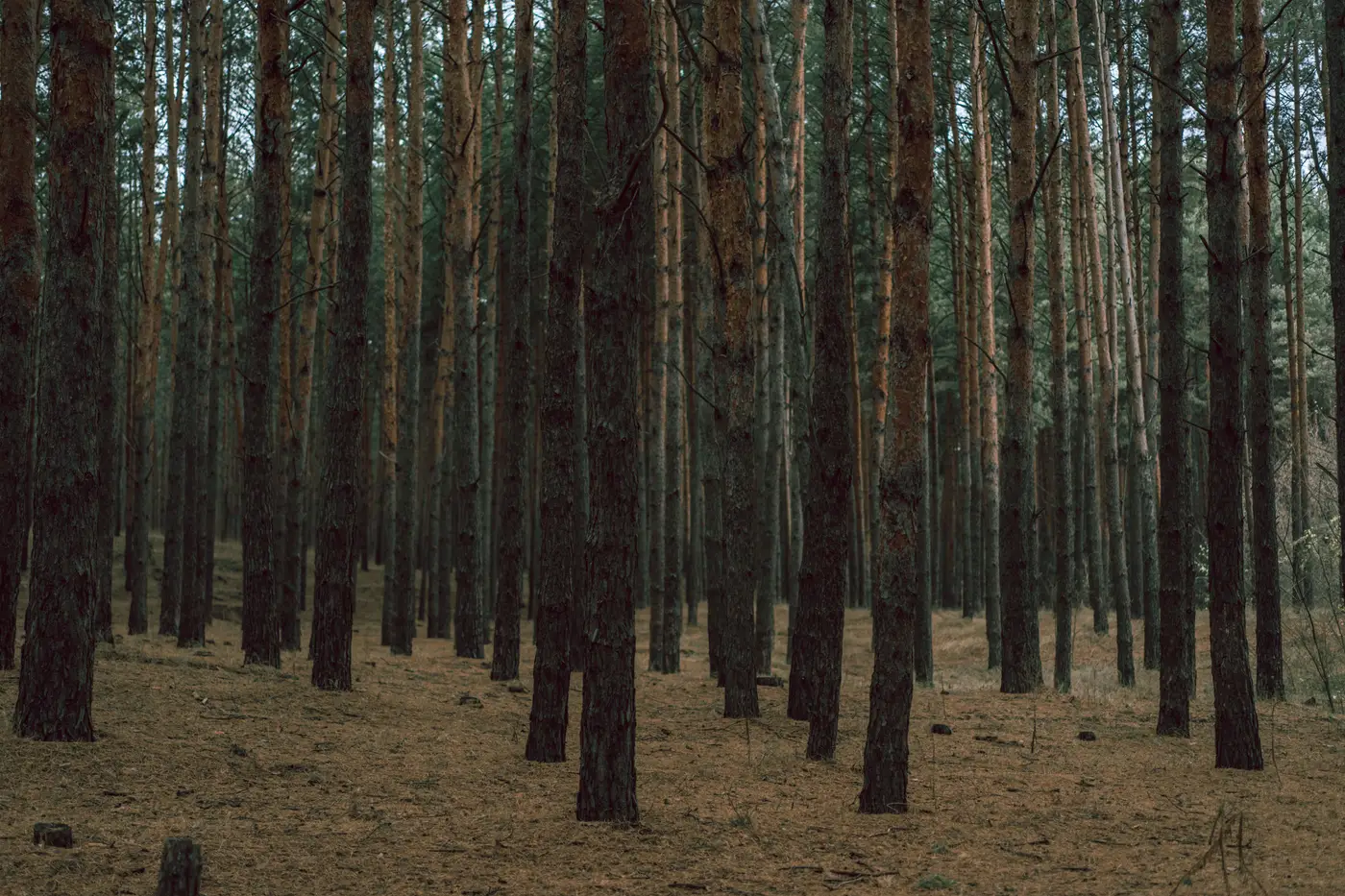
Ask three foresters what tells them a stand is ready to thin and you'll get three different field habits, but underneath most of them is the same number: basal area. It's a cross-sectional measurement of stem wood at breast height, usually 1.3 meters up the trunk, summed across every tree in a plot and scaled to a hectare. Expressed in square meters per hectare, it's the figure that shows up in every stocking guide you've ever pinned to the office wall.
What basal area measures
Diameter at breast height tells you how big one tree is. Basal area tells you how crowded the stand is as a whole. Take the DBH of every stem in a sample plot, convert each to a circle's cross-sectional area, add them up, and scale that to a per-hectare figure. A stand of a few big trees and a stand of many small ones can land on the same basal area number, which is exactly why it works as a stocking proxy: it captures density regardless of how the volume is distributed among stems.
That's the piece that makes it more useful than crown closure estimates or a quick eyeball from the truck window. Two compartments planted the same year, same species, same site index, can look nearly identical from the road and still carry different basal area, because one is competing harder for light and water underground than the leaves let on from above.
Reading a stocking guide basal area threshold
Every species and site class has a rough basal area ceiling where growth starts going to waste, where competition between stems slows diameter increment enough that the stand is putting on wood you'd rather be concentrating on fewer, better final-crop trees. Stocking guides lay that out as a band, usually tied to age and site index: below a certain basal area per hectare, the stand is still filling in and thinning now would waste growing space. Above it, you're leaving merchantable volume on trees that are stealing light from stems you want to carry to rotation.
The threshold itself isn't a fixed number across the industry. It moves with species, spacing at establishment, and site quality, which is why the guide for your region and species matters more than a rule of thumb picked up on a different coast. What stays constant is the logic: basal area climbing toward the ceiling means the compartment's ready for a first or second thin, and basal area sitting well under it means another season of growth before the harvesting crew gets a call.
Why the timing argument matters more than the number itself
A basal area reading on its own, taken once, tells you where a stand sits today. What drives the thinning decision is the trajectory, how that number has moved against where it should be for the stand's age and site class. A compartment reading mid-band basal area at year twelve could be dead on schedule or running two years behind, and you can't tell which from a single pass through the block. You need last year's number next to this year's, plotted against the growth curve the stocking guide assumes for that site.
That's the gap between the manual round, where a crew walks a transect, tallies a plot or two, and guesses at the rest of the compartment, and a method that tracks every stand's basal area trend year over year without someone driving the fire roads to do it. A per-stand time series built from annual satellite passes puts a compartment's reading next to its own growth trajectory, rather than against a number pulled from memory of last year's visit.
None of this replaces a cruise before harvest. It changes which compartments get that cruise first, because you already know which ones have drifted off the curve and which are still filling in on schedule. If you're scheduling thinning blocks this season and want to see which compartments are actually ahead or behind their stocking curve, that's the gap Plantation Monitor is built to close.