Crown differentiation vs crown closure: why it tells you when to thin
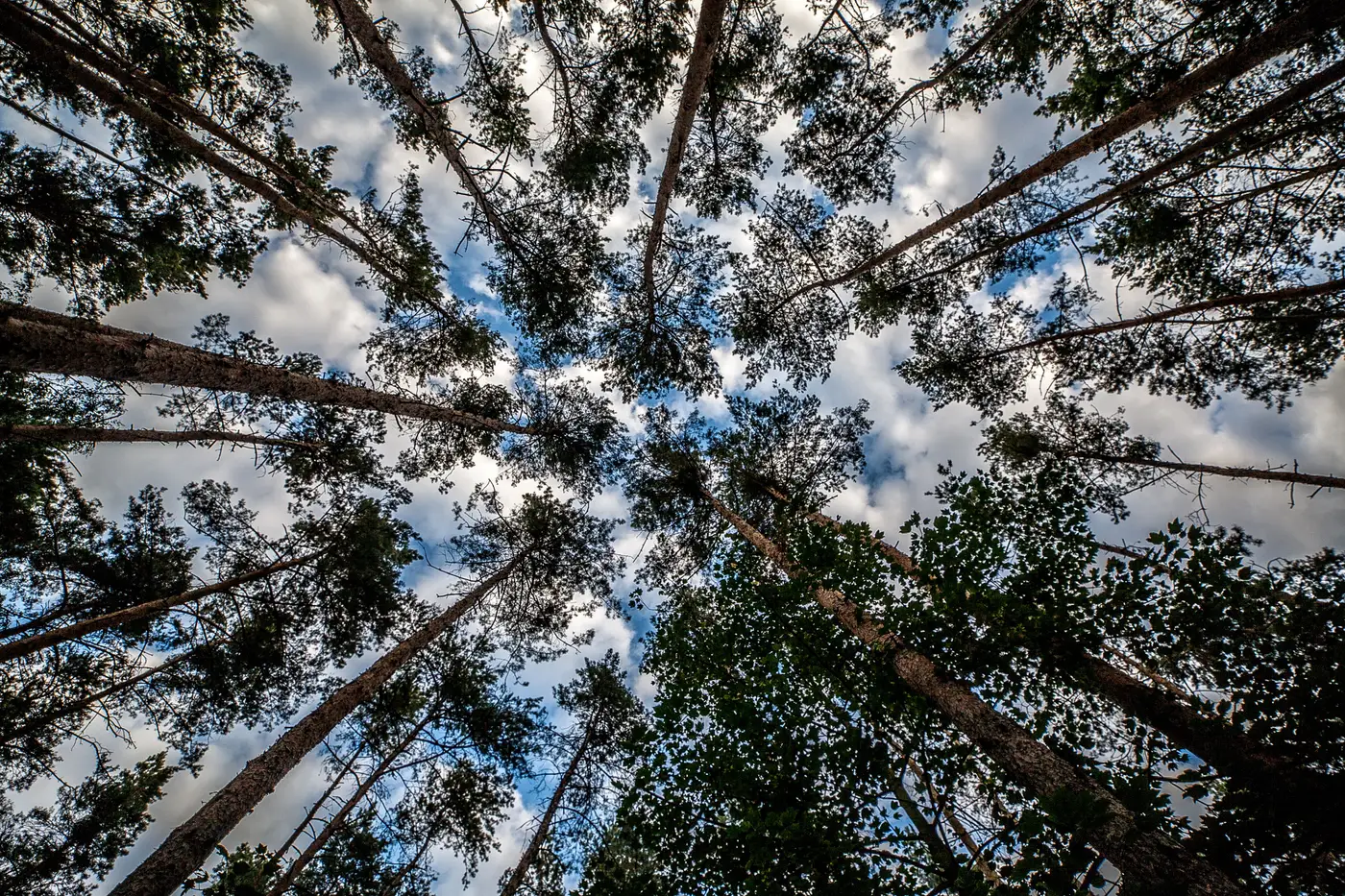
Crown closure gets talked about more, but crown differentiation is the thing that tells you a stand is ready to come out of the ground and into a thinning schedule. The two terms get used almost interchangeably in casual conversation around the mill or the scale house, and that's where a lot of blocks get thinned a season or two late, or a season early when the volume isn't there yet.
Crown closure is the easy one. It's the point where neighboring trees' crowns touch and the canopy stops showing daylight between them from above. Walk a stand before closure and you can still see bare ground or needle litter in the gaps. After closure, you're looking at a solid green roof. It's a visible, binary-ish event, and it's often the thing a forester notes on a cruise sheet as "canopy closed, year X."
Crown differentiation is what happens after closure, and it's gradual rather than binary. Once crowns start touching, trees that were planted at roughly the same height and vigor begin to split into crown classes: dominants that keep pushing height growth and hold full, wide crowns; codominants that are still competitive but losing a step; intermediates that are getting shaded on one or more sides; and suppressed trees that are falling behind on both height and diameter growth, with crowns pinched down to a fraction of what a dominant carries. That sorting, that spread between the winners and the losers in the same age class, is crown differentiation.
Crown closure vs crown differentiation
The distinction matters because closure and differentiation answer different questions. Closure tells you the stand has filled in. Differentiation tells you the stand has started competing hard enough that it's sorting itself into haves and have-nots. A stand can close and sit there for a couple of growing seasons with crown classes still fairly even before the gap between dominants and suppressed trees really opens up. Cruise a stand at closure and a stand three years past closure and the basal area numbers might look similar on paper, but the crown class distribution tells a very different story about where it sits in its rotation.
Confusing the two leads to two different mistakes. Thin at closure, before real differentiation, and you're removing trees that would have sorted themselves into dominant positions anyway. Wait until differentiation has gone too far and suppressed trees have been shaded out for several seasons, and you've lost merchantable volume on stems that were never going to recover their growth rate even after a thin opens the canopy back up.
When crowns start competing
Timing depends on species, site index, and initial planting density more than on calendar age alone. A loblolly stand on a good site at tight spacing can start showing real crown competition five to seven years after closure. The same species on a poorer site, or planted wider, takes longer to get there because there's less lateral pressure between neighboring crowns to begin with. Regional "thin at age X" rules of thumb never quite fit every compartment, even within the same ownership. Two blocks planted the same year can be at completely different points on the differentiation curve depending on soil, drainage, and how even the original stocking was.
Why differentiation signals thinning readiness
Once crown classes have clearly split, competition is actively suppressing growth across a meaningful share of the stand. That's the window where removing codominants and suppressed stems gives the remaining dominants the room to put on diameter growth instead of fighting for light, and where the material coming off still has enough volume to be worth a pulpwood or chip-n-saw sale. Catch it too early and you're cutting trees that hadn't lost the race yet. Catch it too late and the suppressed cohort has already stopped contributing much to the stand's growth.
Reading that signal across every compartment by walking transects and eyeballing crown classes is slow, and it's the kind of call that varies by who's doing the cruising. Plantation Monitor tracks an annual index per stand against its own growth trajectory, so a compartment that's pulling ahead on differentiation shows up against the ones still lagging, without a crew driving the block to guess the age class. If you're scheduling thinning entries across a rotation plan, it's worth seeing which stands are at that point.